


 Sophisticated private event space in ...
Bespoke menus, wine pairings, and timeless interiors



| Make sure to ask for specials for CapeTownMagazine.com readers And give them our regards! | |
 | +27 (0)82 559 6858 |
 | 9 Kus Drive| Kleinbaai Harbour | Gansbaai |
 | www.sharkcagediving.co.za |
 | info@sharkcagediving.co.za |
 | White Shark Diving Company |
 | whitesharkco |

How they breach, top snack spot, why they can’t be held in captivity + more
Last updated: Tuesday, 17 December 2022
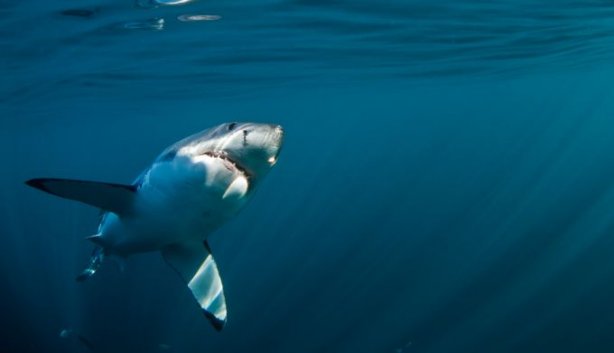
The last great white shark was spotted on 22 December 2022 – these creatures are highly endangered and sightings are rare. The time to go shark-cage diving is now, especially since your adventure with White Shark Diving Company (WSDC) helps support conservation. Before you go, buff up on your shark knowledge: Here’s our A-Z about this mysterious and formidable king of the ocean.
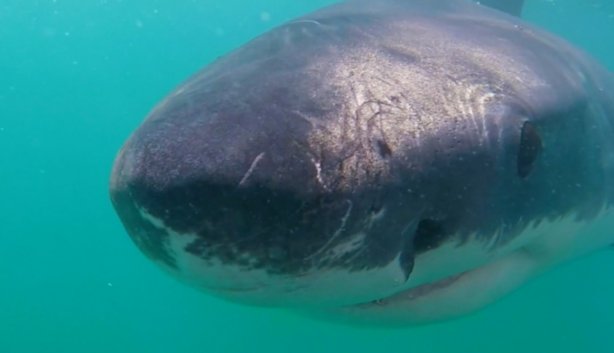
Ampullae of Lorenzini are minute pores around the snout and eyes of all sharks (and rays) that contain a gel sensitive to magnetic and electrical fields. These senses enable them to detect the electromagnetic field of creatures, allowing them to sense what is below or behind them. Recent research has shown that great white sharks are repelled by strong magnets because of this sixth sense, which means there may be an alternative to harmful shark nets in keeping them away from swimming areas.
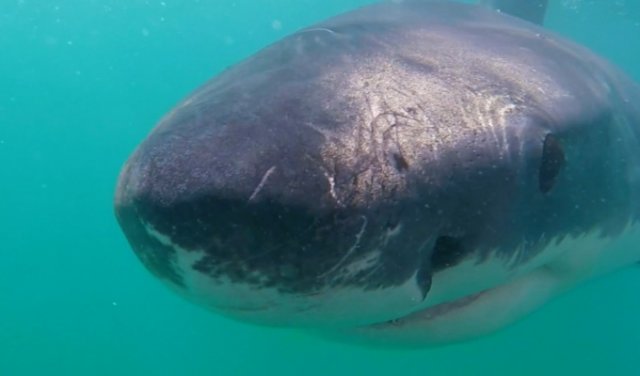
The little pores around the snout are ampullae, highly sensitive to magnetic and electrical fields. Image: WSDC
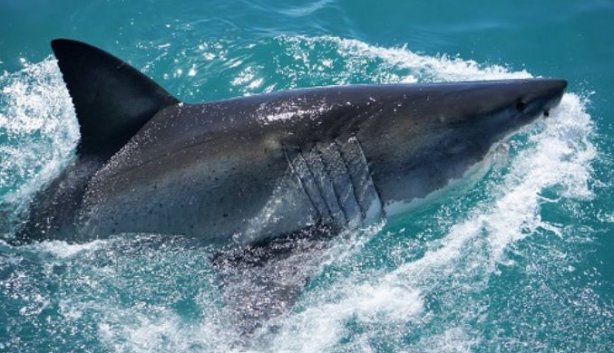
Great white sharks breach when hunting agile prey, such as seals. According to ocean education website ocean.si.edu, they do this by swimming close to the surface, which allows them to reach speeds of up to 65km per hour. They can then propel themselves up to three metres into the air. It’s very rare to witness this, as it requires a lot of energy from the shark.
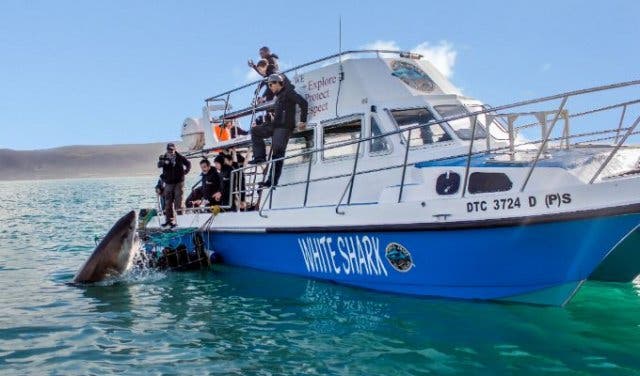
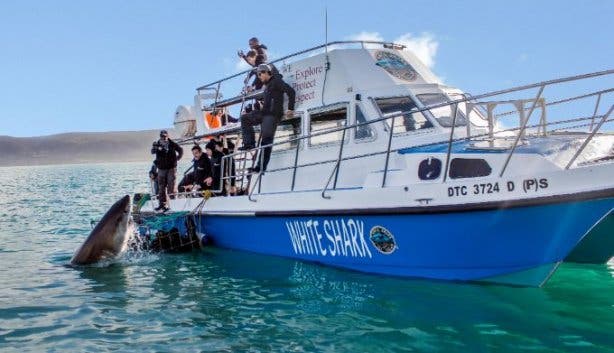
A great white takes a good look at WSDC’s boat. Image: WSDC
Carcharodon carcharias is the Latin name for the great white shark. More commonly, these fish are referred to as “great whites” or “the white death”, but the world is moving towards “white sharks” to reduce the sensationalism around the species, says WSDC.
Dyer Island, situated five nautical miles off the coast of Gansbaai and a roughly 15-minute boat ride from the shore, is home to the shark’s favorite food, seals. Consequently, the area has had one of the densest known white shark populations in South Africa (and the world).
That said, the presence of these sharks has dropped significantly and studies are ongoing in trying to get to the bottom of this. One theory is that it’s a knock-on effect of perlemoen poaching, which has led to a proliferation of kelp – this has made it easier for seals to hide and also makes it difficult for the sharks to hunt.
FEEDING IS A SURFACE ACTIVITY
Great white sharks are surface feeders and as such, all their feeding activity takes place on or very close to the surface of the ocean. Cape fur seals are South African great white sharks’ primary source of nutrition. Luckily, there are about 50 000 to 60 000 seals living in the area of Gansbaai (hence the title of “Great White Capital of the World”).
Sharks are poikilotherms, meaning they are “cold-blooded” animals whose internal body temperature varies widely. White sharks, however, are unique in that they are also heterothermic, which means they maintain an internal body temperature around five to 15 degrees warmer than the surrounding water. This enables their muscles to contract more quickly, so they can swim faster. Recording sensors suggest they can reach speeds of 30kph.
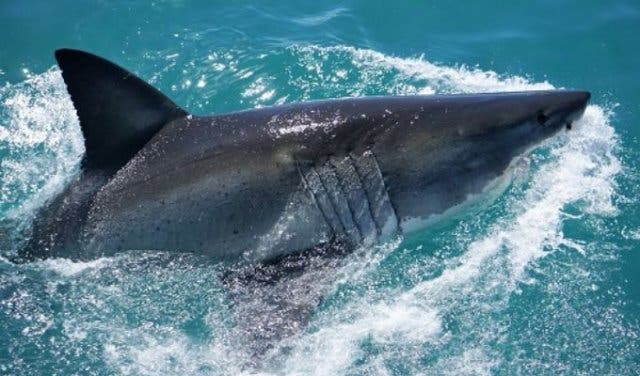
Did you know a white shark can reach a speed of 30kph? Image: WSDC
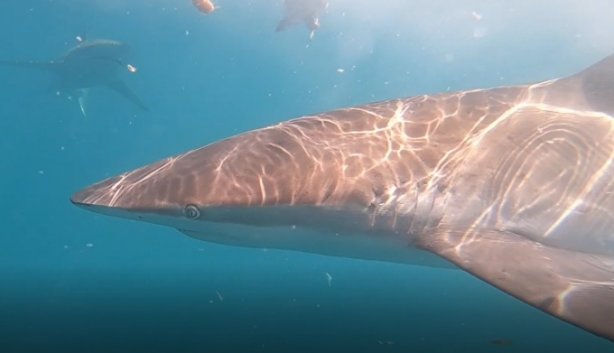
Gansbaai is only 170km from Cape Town (roughly a two-hour drive) in the Overberg region, and means “goose bay” in Afrikaans. Thanks to the prime shark research and viewing and cage-diving opportunities there, it’s one of South Africa’s greatest attractions. You can find more than 100 shark species in these waters, including bronze whalers.
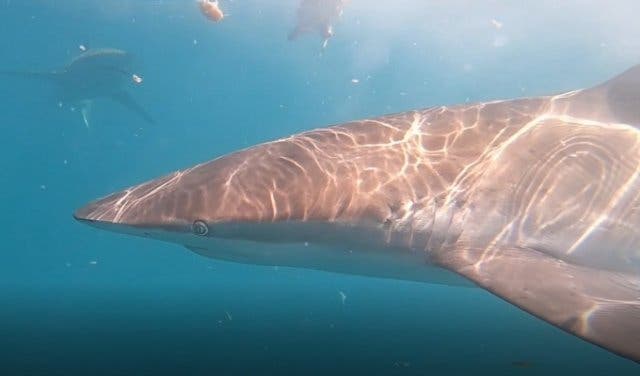
Copper sharks (bronze whalers) often gather in numbers around the WSDC boat. Image: WSDC
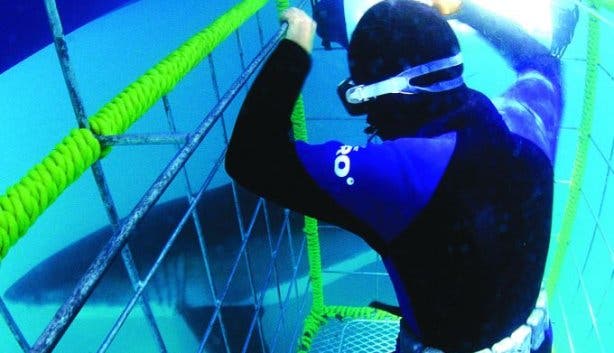
WSDC is the only cage-diving tour operator in Gansbaai to offer the exclusive hookah cage-dive experience. The onboard air-supply system allows divers to remain underwater while in the cage for optimal shark viewing, with no previous diving experience necessary. WSDC regularly runs specials on cage diving packages, so check their homepage.
View this post on Instagram
The dorsal fin of each white shark is unique and can be used as a way to identify individuals. WSDC’s Shark & Marine Research Institute collaborates with Stellenbosch University to monitor the white shark population via software called Identifin, which was designed in collaboration with Stellenbosch University scientists Dr Sara Andreotti, Prof. Ben Herbst and Dr Pieter Holtzhausen.

You can identify white sharks by their dorsal fins. Image: WSDC
Jaws was American writer Peter Benchley's best-selling novel in 1974. The subsequent 1975 film adaptation directed by Steven Spielberg made the public view the white shark as a “man eater” – not true. The reality is we're in its territory when we're in the ocean, and have done far more harm to the white shark species than it has done to ours.
Despite some people’s opinions, white sharks are not merciless killers. If anything, they are cautious predators and avoid humans more than attack them. The evidence for this is that attacks on humans are often abandoned, which has led experts to believe that great whites mistake us for seals.
Commercial long-line poaching for sharks' jaws, teeth and fins is one of the greatest threats to these animals, along with the huge demand for shark-fin soup in the East. Then there are shark nets, “ghost” nets (discarded by fishing boats), drumlines, bycatch, and the loss of white sharks’ own food source due to overfishing and environmental changes. A study by the University of Stellenbosch suggested recently that between only 353 and 522 white sharks still exist along our coastline.
White sharks are more at threat from humans than we are from them. Image: WSDC
Researchers are largely in the dark about white shark courtship, coupling and reproduction. What is known is the female reaches sexual maturity at between 12 to 18 years of age, so its reproduction rate is low, which makes it vulnerable to extinction. Most large sharks are ovoviviparous, meaning they incubate and hatch their eggs in the womb and only give birth once the young are developed enough to survive on their own, at about 1 metre long.
Many aquariums around the world have tried, but nowhere is the white shark on display. White sharks are known to become very stressed in captivity. In the sea, they move constantly, albeit slowly sometimes, and can move across vast areas. When placed in a tank, they constantly swim into the glass and eventually die.
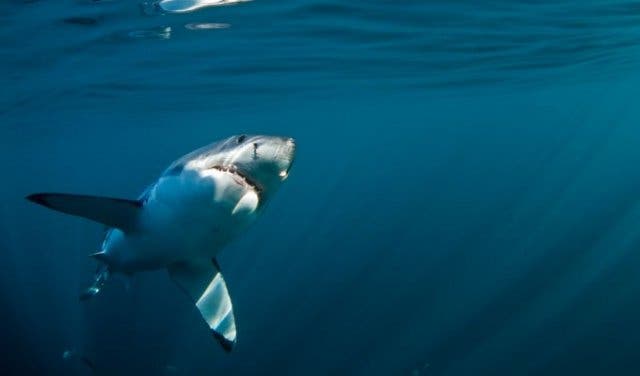
White sharks swim far and wide, studies have shown. Image: WSDC
White sharks are found in almost all coastal and offshore waters in all major oceans, especially those bodies of water surrounding South Africa and Australia. A study found that sharks tagged in South Africa moved across our seas, Mozambique, Madagascar and the high seas.
The white shark is an apex predator, and its disappearance will have an effect on the trophic levels below it. WSDC is fully committed to the preservation of white sharks and the marine environment as a whole. It has various conservation and social responsibility initiatives and is involved in facilitating and funding several ocean conservation enterprises.
It supports ongoing research through its non-profit organisation Shark & Marine Research Institute, which monitors the shark populations along the Gansbaai coast. Research projects are run in collaboration with the Department of Environmental Affairs and the University of Stellenbosch.
Despite years of research, we actually know very little about white sharks – one of the most phenomenal aspects of these formidable creatures is their ability to remain elusive and unpredictable. A lot of information – how long they live, how many months they gestate for, when they reach maturity and so forth – is still subject to debate because reports are often based on rough estimations or speculation.
Despite our fascination with these creatures, they are tricky to study and much about them is still unknown. Image: WSDC
WSDC runs multiple collaborative research projects through its Shark & Marine Research Institute. From ethical angling, tagging, measuring and genetic sampling to data collection via snorkelling surveys conducted in the local kelp forests, where smaller shark species are caught by hand. All the data collected is analysed and submitted to a national database to aid the government in making better management decisions affecting our oceans and sharks.
WSDC is involved in innovative new technology to promote beachgoer safety, without costing the lives of marine creatures. The Sharksafe Barrier is an eco-friendly and non-lethal alternative to shark nets and drumlines that uses strong magnets and a kelp forest-style barrier that keeps great white sharks at bay.
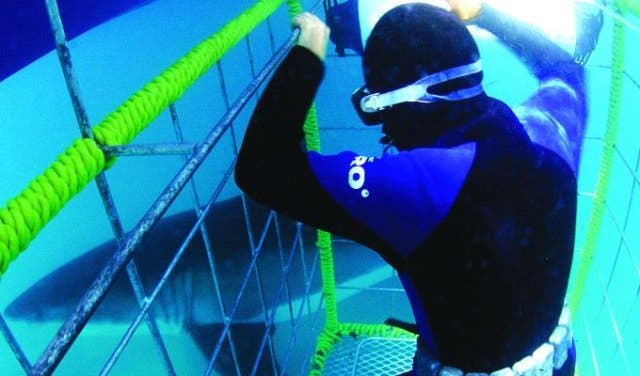
Shark-cage diving in South Africa is on the "Top 10 experiences" lists of virtually all travel guides. Although currently, white sharks are less visible, there are many other shark species around, such as bronze whalers, which can congregate around the WSDC boat in large numbers. WSDC allows a maximum of 22 passengers on board its boat and a maximum of eight divers in the floating cage, and significant time is spent with the sharks.
You’ll be in excellent hands with this experienced team. Image: WSDC
WSDC IS A WINNER
WSDC has been the winner of the TripAdvisor Certificate of Excellence for five years running, and is bound to get you closer to white sharks than any other operator. They're holders of the Traveller's Choice award (2020 to present) and represent the world's top 10% of activities to experience, as rated by TripAdvisor.
The WSDC’s Volunteer Programme offers volunteers the chance to become involved in groundbreaking research while studying white shark populations and behaviour, shark and ray diversity and abundant fish biology, marine debris accumulation and ocean conservation. Assistant researchers will also receive first-hand experience onboard WSDC’s tourist boat, play a vital role in data collection and management, as well as get ample cage-diving time during their volunteer adventure to learn more about apex predators.
The white shark is probably one of the oldest species that we can still see in the ocean today. The earliest ancestors of great white sharks existed around 400 million years ago, but white sharks probably arrived around 60 to 100 million years ago.
WSDC’s crew members are specialists in shark behavior and have full safety authority credentials. WSDC has been operating for 20 years with a 100% safety record. The staff and crew members are well-trained and the company facilities are constantly upgraded to ensure continued growth through customer satisfaction. They've had zero shark attacks to date.
Shark-cage diving and viewing with the WSDC costs between R1 900 for non-divers and R2 200 for divers. Look out for WSDC’s seasonal specials on its homepage. Plus, we've organised you a discount - check it out.
White Shark Diving Co. is open: Monday to Sundays, 8am - 10.30pm
Find it: 9 Kus Drive | Kleinbaai | Gansbaai | Western Cape
Contact WSDC on: 082 559 6858, info@sharkcagediving.co.za, @whitesharkco
---
So now you know everything about white sharks. Is it not time to go diving?
Contribute to the body of knowledge on white sharks. Consider volunteering.
The White Shark Diving Company has won Tripadvisor awards and is the top operator for shark dives in the area.
---
Loved discovering this? Make sure you get our popular weekly newsletter. Follow and like us on Twitter ❤ Facebook ❤ LinkedIn ❤ Instagram ❤ Pinterest for updates.
Sophisticated private event space in ...
Bespoke menus, wine pairings, and timeless interiors
 Rooftop clubhouse with yoga, sauna, ...
It’s open from 7am to 5.30pm. 5 reasons to go Light House Holistic
 Brandy, tequila & gin tastings with ...
Steaks are the main event. The tastings complete the experience
 Pear Tree, the tiny Hermanus bistro ...
Breakfast poké bowls, egg and kimchi tacos, and fresh juices
 Free jazz nights at Dutchies by Grotto ...
Sushi platters, crisp wine, and jazz in the sea breeze
 Filini at Radisson Cape Town Foreshore
Tiramisu martinis, lasagne crocchetta and more
 Brewery with food specials every single ...
Daily deals on classic comfort meals like burgers, schnitzel, ribs, steaks…
 Cool taproom with amazing happy hour & ...
Craft beer tasting trays, burgers for just R60, R35 happy hour pints
 Hermanus’s tidal pool restaurant is ...
Twinkling fairy lights, ocean views and cocktails at sunset


© 2005 - 2026 Cape Town Magazine PTY Ltd. All rights strictly reserved [2005 - 2026].