


 Sophisticated private event space in ...
Bespoke menus, wine pairings, and timeless interiors



| For Moments of Joy. Follow our social channels for useful news, daily local champions | |
 | 072 350 2062 |
 | Cape Town Collective, 38 Wale Street, City Centre |
 | www.capetownmagazine.com/subscribe |
 | partners@capetownmagazine.com |
 | CapeTownMag |
 | CapeTownMagazine.com |
 | capetownmag |

New 'Big City Look'... urban dining and people watching
Last updated: Tuesday, 12 August 2024
It's time.
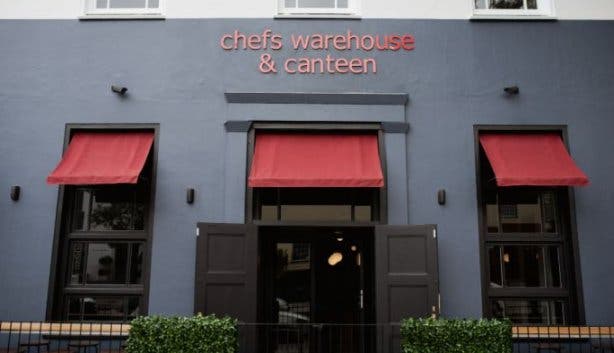
Chefs Warehouse & Canteen is open, on the ground floor of 91 Bree Street, the triple story building which has been entirely renovated by the Tomlins since its previous iteration as The Bailey.
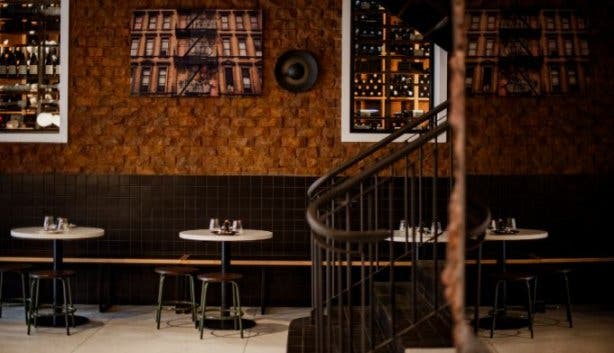
The new look is rustic exposed brickwork and concrete, steel, black tiling and sexy modern lighting, featuring a number of artworks by Paul du Toit, who was a close friend.
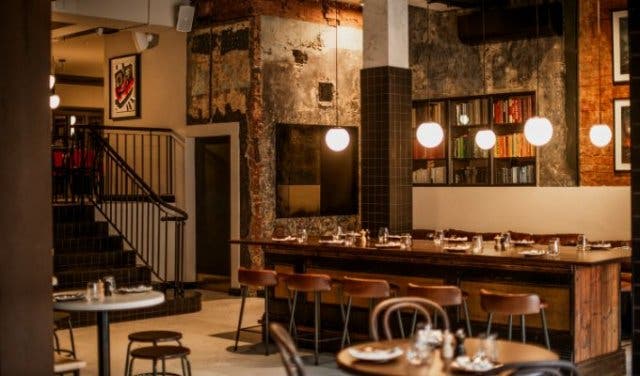
The new look is rustic exposed brickwork and concrete and sexy modern lighting. Image: Chefs Warehouse & Canteen
This includes the large rectangular black and white graphic du Toit-inspired table with its red leather chairs, the perfect spot for sharing Tapas for 2.
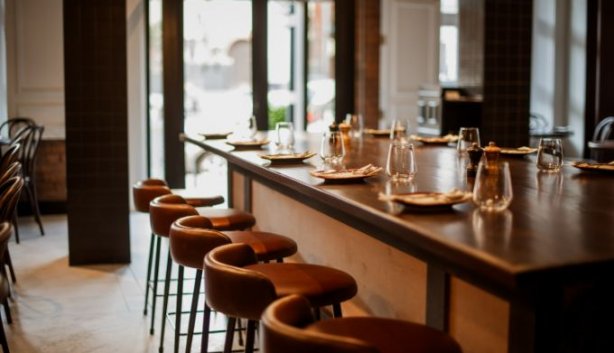
A variety of seating means that just like the food, there’s something for everybody. At the centre of the restaurant is a long wood table with barstools taking a cue from the original Chefs Warehouse & Canteen with its communal dining, complete with the old uncomfortable stools!
Other seating includes simple contemporary white round and rectangular wood-topped tables with both plain and leather upholstered bench and chair seating.
On the landing next to the bar are two other seating areas: the Paul du Toit family table, and several banquettes under a bank of smoky mirrors. Outside on the Bree Street pavement, there are long tables for urban dining and people watching.
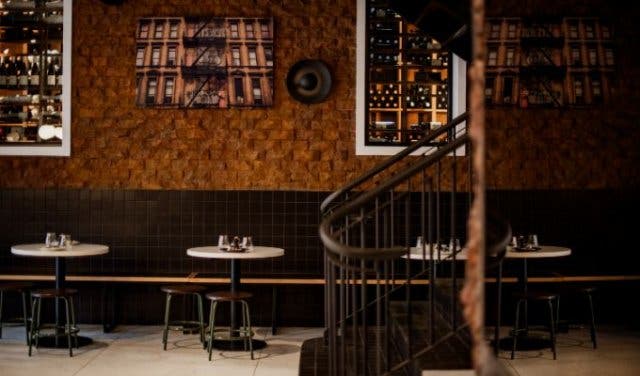
An open steel staircase with wood treads connects Chefs Warehouse & Canteen to the floor above, which will be home to Merchant Bar & Grill. Image: Chefs Warehouse & Canteen
An open steel staircase with wood treads connects Chefs Warehouse & Canteen to the floor above, which will be home to Merchant Bar & Grill (opening Tuesday 13th August).
The staircase has created a light-filled atrium with dramatic views of the restaurants from above and below. A highlight is the chandelier suspended from above.
A series of butchery inspired ceramic works created by Cape Town-based Ceramic Matters has been refashioned into a large illuminated double-volume chandelier with hanging cleaver, leg of lamb, tube of tomato paste, garlic and chicken feet – as well as comical items like a paintbrush and a rat.
The piece is indicative of the passion and respect that Tomlin and Schneider have for the culinary arts and the old trades of butchery and fishmongery. It’s also an invitation to explore the new concept loading upstairs: Merchant Bar & Grill is an old-school modern restaurant featuring the best local producers, complete with a Larder stocked with house-made charcuterie and other preserves, along with an extensive selection of cheeses. Some of these products will also be on the menu at Chefs Warehouse & Canteen.
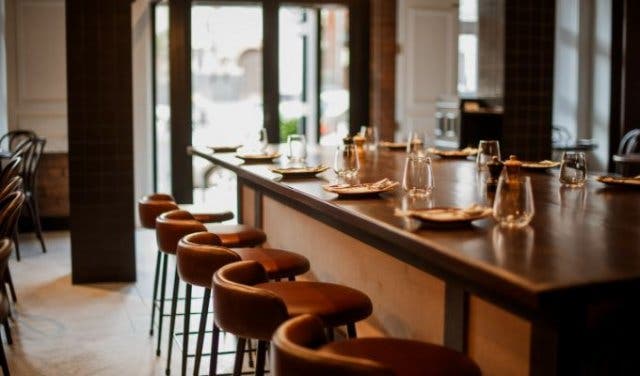
Chefs Warehouse & Canteen is a partnership between Liam and Jan Tomlin, and David Schneider. Image: Chefs Warehouse & Canteen
On the second and top floor is Room 91, Chefs Warehouse’s self-contained private events space overlooking Bree Street. It is an easily adaptable multi-level indoor-outdoor space that can be used for anything from cocktail parties to launches to meetings to wedding receptions and sit-down lunches and dinners. The key attraction, besides the vibrant CBD setting, is that it is a space for events where Chefs Warehouse food is served.
Chefs Warehouse & Canteen is a partnership between Liam and Jan Tomlin, and David Schneider. Head chef Adrian Hadlow is the youngest of the three generations of chefs steering the helm at 91 Bree Street, and together, Tomlin, Schneider and Hadlow make a formidable team.
“Chefs Warehouse & Canteen was what made us in Cape Town when we first came here,” says the Dublin-born Tomlin. “This restaurant now also feels so natural, so much an expression of our love for food and dining experiences that are high quality, exciting, fun and unstuffy…but also what we think diners are looking for today. It’s like the best of past, present and future.”
“The original has a deeply personal and special place in our hearts,” says Tomlin. “We loved the compact size and the social vibe it created but it also limited us in terms of seating and overall decor. In this newly imagined space, we can play more with art, lighting ….we even have space for two wine cellars and a good part of my cookbook collection.”
Tomlin’s cookbook collection is more like a technicolour library visible through a large window overlooking the dining room, with hundreds of jacket-free colour coordinated cookbooks that have inspired him throughout the years.
From Gyoza to Bouillabaisse to Bone Marrow with Beef Short Rib Sharing dishes, flavours and conversation has always been what Chefs Warehouse & Canteen was all about, and the beloved format of Tapas for 2 returns with a four course menu for R800 per person, along with the option of ordering individual plates from an à la carte menu.
Dishes like venison tataki, pork gyoza, roast pork belly with lentil ragout, duck breast with fesujin sauce, and bouillabaisse are back, amongst other old favourites, and a frequently changing Tapas for 2 format will keep the menu as fresh and full of surprises as it was ten years ago when the concept first launched.
Like nearly all of Tomlin’s restaurants, the fixtures are oysters, currently served with Vietnamese Dressing, risotto (currently pea with smoked pork shoulder croquettes) and lemon posset.
The wine selection is impressive, with Tomlin bringing over much of his own personal collection to fill two well-stocked wine cellars, which sandwich the dining room.
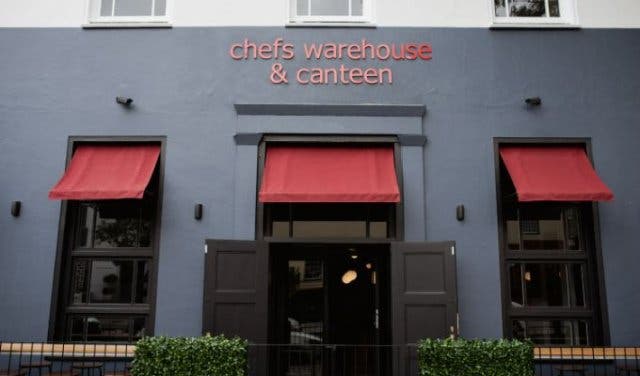
You can admire Tomlin’s cookbook collection at the new Chefs Warehouse & Canteen. Image: Chefs Warehouse & Canteen
Chefs Warehouse & Canteen opened Wednesday 7th August, trading lunch and dinner from a Monday to a Saturday.
You can call them on +27 (0) 21 773 0440 or email 91breestreet@chefswarehouse.co.za or have a look at www.chefswarehouse.co.za.
We can imagine you'd like to know how you can book a table. Simply book a table at Chefs Warehouse on Bree on Dineplan.
Merchant Bar & Grill opens on Tuesday 13th August from 6pm for dinner service (the bar opens from 5pm) - trading from a Tuesday to a Saturday, exclusively dinner.
Every time, one thing you would not want to miss?
subscribe to (y)our free newsletter
and
follow us right now on @CapeTownMag
---
Great Karoo kos with a warm vibe: Boma on Bree (where La Parada used to be).
Discover more newly opened restaurants for a bite.
Explore the old, new and secret corners on Cape Town's Bree.
Have a fresh one - with our team's selection of '7 things for this weekend'.
Sophisticated private event space in ...
Bespoke menus, wine pairings, and timeless interiors
 Rooftop clubhouse with yoga, sauna, ...
It’s open from 7am to 5.30pm. 5 reasons to go Light House Holistic
 Breakfast at mischu: R119 special with ...
Eggs benedict & flat white for R119, + try the viral crookie
 Waffle Shack is the ultimate ...
Waffle crocs on a blue flag beach near Hermanus
 Brandy, tequila & gin tastings with ...
Steaks are the main event. The tastings complete the experience
 Pear Tree, the tiny Hermanus bistro ...
Breakfast poké bowls, egg and kimchi tacos, and fresh juices
 Free jazz nights at Dutchies by Grotto ...
Sushi platters, crisp wine, and jazz in the sea breeze
 Filini at Radisson Cape Town Foreshore
Tiramisu martinis, lasagne crocchetta and more
 Brewery with food specials every single ...
Daily deals on classic comfort meals like burgers, schnitzel, ribs, steaks…
 Cool taproom with amazing happy hour & ...
Craft beer tasting trays, burgers for just R60, R35 happy hour pints


© 2005 - 2026 Cape Town Magazine PTY Ltd. All rights strictly reserved [2005 - 2026].